MamoGe
- MamoGe
- 01.10.2020 - 30.09.2022
- Federal Ministry for Economic Affairs and Energy
- Central Innovation Program for SMEs (ZIM) - Project form: Cooperation project
- 188.000€
- Prof. Dr. Wilhelm Nüßer
- Matthias Füller, Pascal Niggemeier
- CTM Fahrzeugbau GmbH, Bestensee; Innok Robotics GmbH, Regenstauf; Hamburg University of Applied Sciences (HAW)
Modular system for semi-autonomous robots
Project MamoGe: Microservices for automated mobile devices
When we hear about autonomous systems today, we often think directly of autonomous driving of cars or trucks. However, the possible applications are much broader: more and more robots are taking over gardening work, are being used on construction sites, clean large areas and can also relieve the burden on human staff in hospitals. However, the development of such systems is still usually a laborious and individual project. While good, reusable building blocks exist in many other areas of computer science, in projects for semi-autonomous systems all the necessary components often have to be created from scratch. This naturally slows down the development of further useful application scenarios.Development of reusable software components for the automation of processes
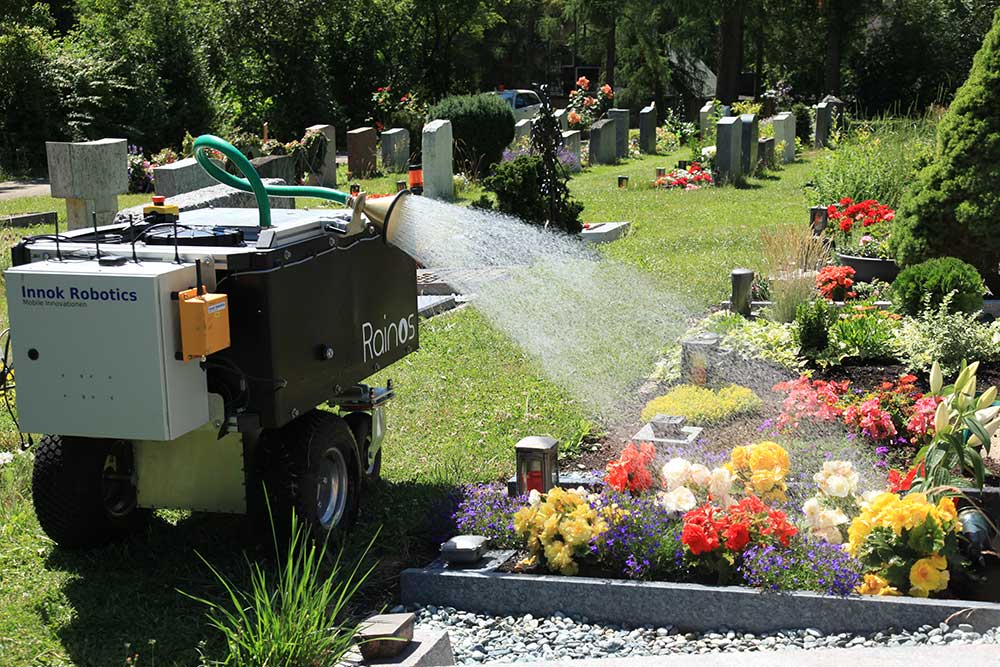
And this is precisely where the MamoGe project comes in. It aims to develop a modular toolbox of software components, e.g. microservices, for the automation of higher-level logistics processes, which can be easily transferred to other application scenarios and thus reused. As a first step, the ZIM project is focusing on application areas that take place in large areas, as many processes are simpler here. An R&D consortium of highly motivated partners has come together for two specific areas of application. Based on the two application examples, it is attempting to develop a generally valid and therefore reusable modular system that will facilitate the development of new applications in the future. The first demonstration system is a mobile robotic system from Innok Robotics, the Rainos. It is used for the differentiated irrigation of areas in cemeteries and parks. This system is designed to water previously defined areas fully automatically in the early hours of the morning without the need to lay pipes or hoses. Automated detection of the surroundings, planning of specific missions and dealing with obstacles are typical requirements that are considered here.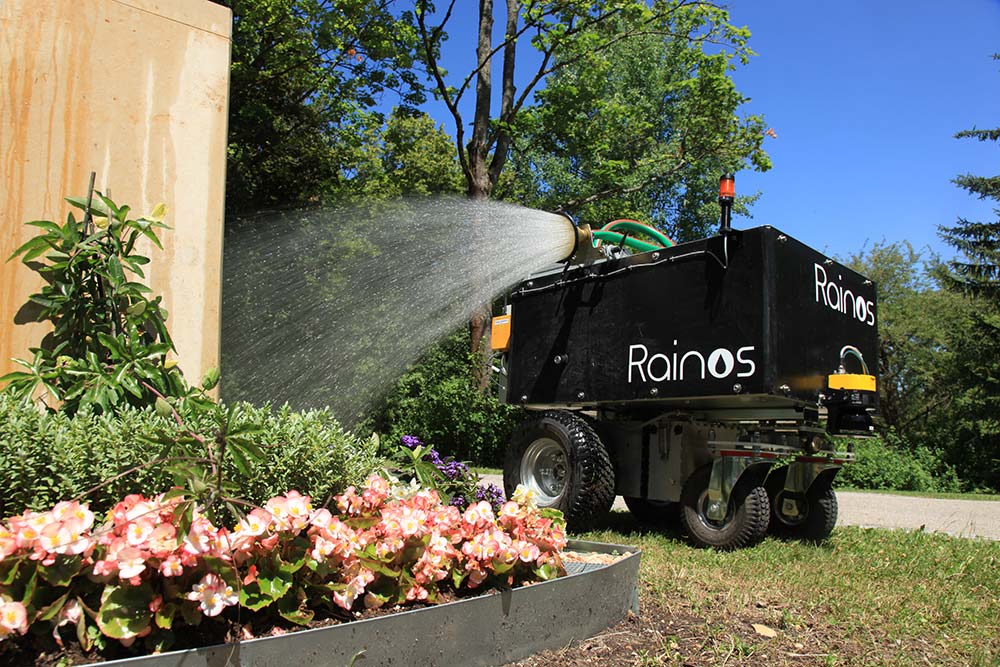
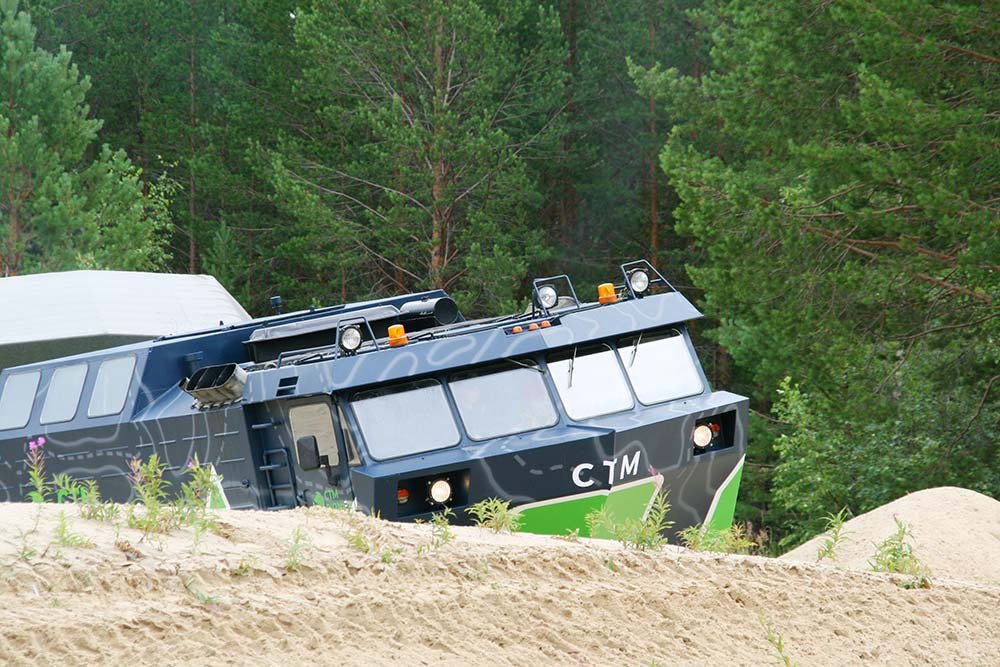
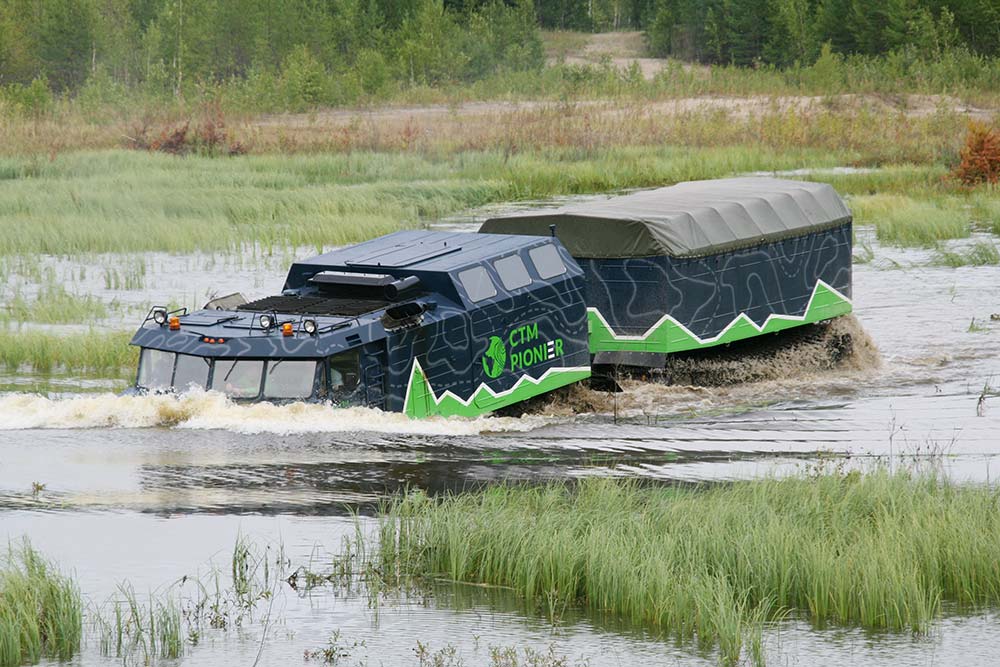
The second demonstration system is a tandem amphibious vehicle from CTM Fahrzeugbau, the pioneer that can be used in the construction of auxiliary bridges. In addition to the tasks mentioned above, there are also questions as to how suitable driver assistance systems can be designed to enable a gradual transition from manual to semi-autonomous control through to driverless operation.
The project partners are responsible for the following sub-projects:
CTM Fahrzeugbau GmbH: Automation of mobile processes in the context of rescue operations and landscaping
Innok Robotics GmbH: Automation of the service level for an autonomous mobile irrigation robot
FHDW: Development of tools for route optimization of mobile services under dynamically changing boundary conditions in the treatment of large areas
HAW Hamburg: Optimization tools for situation-dependent decision-making for area-related services